

How To Light Candles Without A Lighter?
Lighting a candle is usually as simple as reaching for a lighter but what happens when you don’t have one nearby? Whether your lighter has run out of fuel or you simply don’t have one available, there are several practical ways to light a candle using common household items.
Learning how to light a candle without a lighter can be useful during power outages, emergencies or when you want to enjoy your favorite candle without traditional lighting tools.
In this guide we’ll explore safe and effective alternatives, along with important precautions to help you light a candle without a lighter while reducing the risk of burns or accidental fires.
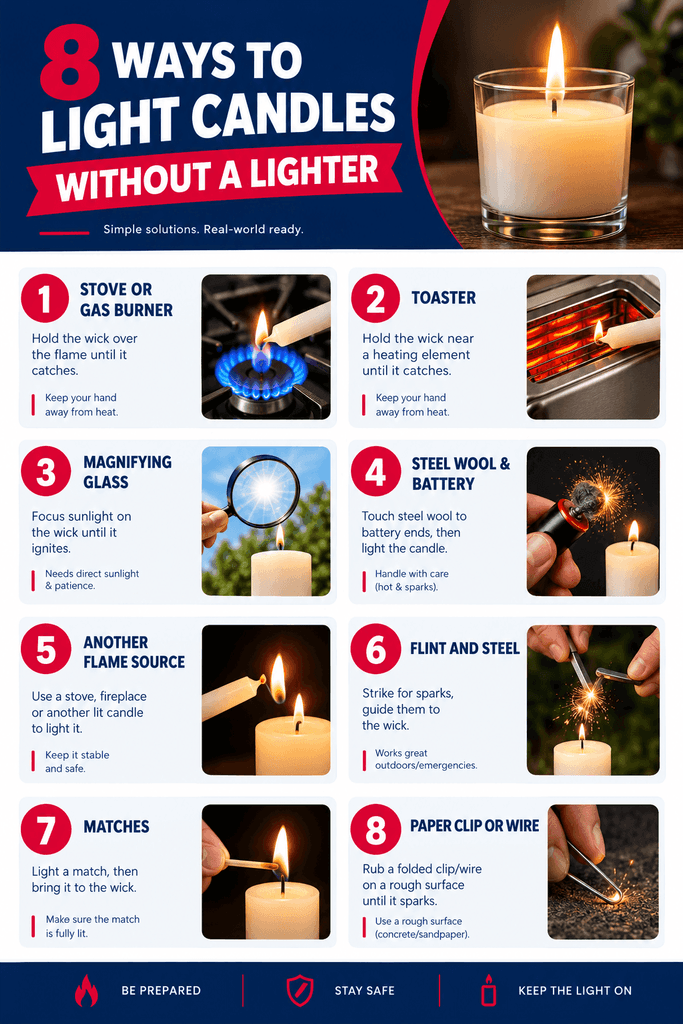
8 Ways To Light Candles Without a Lighter
1) Use a Stove or Gas Burner
If you have access to a stove or gas burner this can be an easy and safe way to light a candle without a lighter. Simply turn on the burner and hold the wick of the candle over the flame until it catches fire.
Be sure to use caution when doing this and keep your hand away from the direct heat. Once the candle is lit carefully move it away from the flame and place it where desired.
2) Use a Toaster
Believe it or not a toaster can also be used to light a candle without a lighter. Simply turn the toaster on and hold the wick of the candle near one of the heating elements until it catches fire.
Again be sure to use caution and keep your hand away from the direct heat. As with the stove or gas burner method, once the candle is lit carefully move it away from the toaster and place it where desired.
3) Use a Magnifying Glass
If you are outdoors and have access to sunlight a magnifying glass can serve as an effective tool for lighting a candle without a lighter. Hold the magnifying glass between the sun and the candle, focusing the sunlight onto the wick until it catches fire.
This method may take a bit more time and precision but can be a fun and unique way to light a candle in an emergency.
4) Use Steel Wool and a Battery
Another unconventional method for lighting a candle without a lighter is using steel wool and a battery. Simply touch the steel wool to the positive and negative ends of a battery causing it to ignite. Once it is on fire quickly use the burning steel wool to light the wick of your candle.
5) Use Another Flame Source
If you have access to any other type of open flame such as a gas stove, fireplace or even another lit candle you can use that to light your candle. Simply hold the unlit candle over the flame until it catches fire and then move it away from the heat source.
6) Sparks from Flint and Steel
If you have a survival kit or camping gear with flint and steel you’re in luck. Strike the steel against the flint, producing sparks. Guide these sparks toward the candle wick until it catches fire. This method is reliable in outdoor situations or emergency scenarios.
7) Use Matches
If you don’t have a lighter but happen to have matches, they can also be used to light a candle. Be sure to use caution when handling the match and make sure it is completely lit before bringing it close to the candle wick.
8) Use a Paper Clip or Wire
In a pinch you may be able to create your spark by folding a paper clip or wire into a small loop and rubbing it quickly against a rough surface such as concrete or sandpaper. Once you have created enough friction the paper clip will become hot enough to create sparks which can be used to light your candle wick.
Safety Tips for Lighting a Candle Without a Lighter
Using alternative methods to light a candle comes with extra responsibility. Follow these precautions every time you reach for a backup flame source.
- Keep Flammable Materials Away From the Flame: Before you strike a match or lean toward a gas burner, clear the area of paper towels, curtains, loose clothing and aerosol cans. A stray spark from a match head or a dripping wax trail can ignite nearby surfaces faster than you’d expect. Candle fire safety guidance mention that keep the candle in a stable holder and at least 12 inches away from anything that can burn.
- Use Long Reach Tools Whenever Possible: If you’re lighting a candle from a stove or another open flame, hold a long wooden match, a dry spaghetti noodle or a rolled paper taper instead of tilting the candle toward the heat source. This keeps your fingers at a safe distance and prevents hot wax from spilling onto your hand or the stovetop.
- Never Walk Through the House Carrying an Open Flame: Light your transfer tool, move calmly to the candle and extinguish the tool immediately after the wick catches. Rushing with a burning match or stick increases the chance of dropping embers on carpet or furniture.
- Place the Candle on a Stable, Heat Resistant Surface First: A wobbly shelf or plastic tray is dangerous enough with a lighter it’s even riskier when you need both hands for an improvised lighting method. Set the candle on a ceramic plate, metal tray or stone countertop before you begin.
- Have a Fire Safety Backup Within Arm’s Reach: Keep a glass of water, a damp cloth or a small fire extinguisher nearby. Alternative lighting methods are less predictable than a lighter so having a quick way to smother an accident gives you real peace of mind.
- Trim the Wick to About ¼ Inch Before Lighting: A long or crooked wick can produce an uneven flame, dripping or flaring. Trim the wick to about ¼ inch before lighting and keep the wax pool free of wick trimmings, matches and other debris. These simple candle care and wick safety practices can help your candle burn more consistently.
- Supervise Children and Pets at All Times: Matches, heated sticks and open stove burners are far more accessible to curious hands and paws than a childproof lighter. If kids are nearby light the candle in another room and bring it back once the flame is steady.
What Should You Avoid When Lighting A Candle Without A Lighter?
When you don’t have a lighter it can be tempting to try whatever flame source is available. However some methods can cause burns, fires or other accidents. Keep these safety precautions in mind:
- Never Use Gasoline, Alcohol or Other Highly Flammable Liquids: These substances can ignite suddenly and cause dangerous, uncontrollable flames.
- Don’t Use Aerosol Sprays as a Flame Source: Products such as hairspray, deodorant and air fresheners can be highly flammable and should never be used to create or transfer a flame.
- Don’t Hold the Candle While Lighting It: Always place the candle on a stable, heat resistant surface before attempting to light it. This keeps your hands safely away from the flame.
- Don’t Lean Directly Over the Flame: Keep your face, hair and clothing away from the candle to reduce the risk of burns or accidental ignition.
- Don’t Use Damaged Matches or Unstable Flame Sources: Cracked, wet or partially burned matches can behave unpredictably and increase the risk of injury.
- Don’t Try Unsafe DIY Methods: If a lighter isn’t available choose a safe alternative rather than experimenting with improvised methods that could start an accidental fire.
When lighting a candle without a lighter safety should always come first. If you don’t have a suitable and controlled flame source it’s better to wait until you can light the candle safely.
FAQs
Is it safe to pinch a candle?
No, it is not safe to pinch a candle as it can potentially cause the hot wax to spill or splatter, causing burns. It is always best to use proper tools and methods for lighting a candle without a lighter. Some alternative options include using matches, a stove or gas burner, flint and steel or even sunlight with a magnifying glass.
Remember to prioritize your safety and use caution at all times when dealing with open flames. If you do not have access to any of these tools consider using a flashlight or seeking out alternative light sources instead.
Is it safe to use a toaster to light a candle?
While it is possible to use a toaster to light a candle, it is not the safest method and should be used with caution. Always make sure to keep your hand away from the direct heat of the toaster and carefully move the lit candle away from the appliance after lighting.
It’s always best to use proper tools for lighting candles without a lighter rather than improvising with appliances. Additionally be sure to unplug the toaster and let it cool down before using it again for its intended purpose.
What’s the best way to light a candle without a lighter in an emergency?
The best way to light a candle without a lighter in an emergency will depend on the resources you have available. Some effective methods include using matches, flint and steel or even sparks from rubbing a paperclip or wire against a rough surface. It’s important to prioritize safety and use caution when attempting these techniques.
If possible try to keep alternative fire starting tools like flint and steel or matches in your emergency kit for situations when you may not have access to a lighter.
Can I use a candle to light another candle?
Yes, you can use one lit candle to light another. Simply hold the unlit candle over the flame and wait for it to catch fire before moving it away from the heat source.
This can be a helpful technique if you have multiple candles that need to be lit or if your primary source of light goes out and you need an alternative. Just remember to always handle candles and open flames with care to avoid accidents or injuries.
Will using alternative methods to light a candle affect the burn time?
No, using alternative methods to light a candle should not significantly affect its burn time as long as it is lit properly and kept away from any drafts or other factors that may cause it to burn unevenly.
However it’s important to note that different materials used to light a candle may have varying scents or odours that can impact the overall ambience, experience and burning time of candle.
Conclusion:
Lighting a candle without a lighter is a practical skill that can be achieved using various creative alternatives. From utilizing matches and household items like stove burners to employing natural elements such as the sun or another candle, there are diverse methods to kindle a flame even when a conventional lighter is unavailable.
Experimenting with these techniques not only provides a sense of resourcefulness but also fosters an appreciation for ingenuity in everyday situations. Whether camping, experiencing a power outage or simply finding oneself without a lighter, the ability to light a candle using alternative methods adds versatility to one’s repertoire of practical skills.
